10+ Years of MADIMA · MADIMA @ ACCV 2026
Multimodal AI for Dietary Intelligence, Management, and Assessment
For more than a decade, MADiMa has brought together researchers advancing AI, multimedia, sensing technologies, food, nutrition, and health. Join us as we shape the future of multimodal food intelligence.
Venue
Osaka, Japan
Date
Dec 14, 2026 (Full-day)
Next Deadline
October 2, 2026
Workshop Overview
Call for Papers
Guidelines for submitting and presenting original research at MADIMA 2026.
Topics of Interest
We invite submissions presenting original research, practical applications, datasets, benchmarks, and perspectives on multimodal artificial intelligence for dietary intelligence, management, and assessment. Topics of interest include, but are not limited to:
- Supervised, semi-supervised, weakly supervised, unsupervised, and self-supervised learning for food recognition and understanding
- Fine-grained food recognition, transfer learning, few-shot learning, long-tailed learning, and learning with noisy labels
- Food detection, localization, segmentation, tracking, and instance counting using conventional and foundation models
- Large language models, vision-language models, and multimodal foundation models for recipe understanding, ingredient recognition, food composition analysis, nutritional content estimation, and database grounding
- Monocular and stereo depth estimation, three-dimensional reconstruction, and point cloud analysis for food volume and portion size estimation
- Augmented and virtual reality for interactive food analysis, dietary logging, portion estimation, and nutrition education
- Trustworthy and deployable multimodal AI, including explainability, robustness, fairness, privacy, federated learning, and efficient edge deployment
- Multimodal food representation learning across images, video, text, speech, depth, wearable devices, and other sensor data
- Out-of-distribution food detection, anomaly detection, open-set recognition, open-world recognition, and uncertainty estimation
- Generative models for food image and video synthesis, data augmentation, counterfactual generation, and multimodal content generation
- Multimodal dietary intake assessment using food images, videos, speech, text, barcodes, wearable devices, and mobile or ambient sensors
- Personalized dietary management, including meal planning, food recommendation, intake monitoring, adaptive feedback, and behavioral support
- Temporal and contextual modeling of dietary behavior, meal patterns, food diaries, cuisine diversity, and cultural factors
- Datasets, benchmarks, evaluation protocols, and metrics for multimodal food understanding and dietary assessment
Important Dates
Archival track
| Full paper submission | September 22, 2026 October 2, 2026 |
| Notification of acceptance | October 14, 2026 October 19, 2026 |
| Camera-ready submission | October 4, 2026 October 24, 2026 |
Non-archival track
| Extended abstract submission | October 18, 2026 October 26, 2026 |
| Notification of acceptance | November 2, 2026 |
Nectar track
| Submission | October 18, 2026 |
| Notification of acceptance | November 2, 2026 |
All deadlines are 23:59 Anywhere on Earth (AoE).
Late submissions will be considered until October 9, 2026. Please contact the organizers.
Venue
Osaka International Convention Center (Grand Cube Osaka)
Nakanoshima, Kita-ku, Osaka, Japan
Held in conjunction with ACCV 2026 (Asian Conference on Computer Vision), December 14–18, 2026 - workshops and tutorials on Dec 14–15, main conference Dec 16–18. MADIMA 2026 takes place on December 14, 2026 (full-day) in Room 1005.
Manuscript Submission
MADIMA 2026 will be held in conjunction with ACCV 2026 (Asian Conference on Computer Vision), with three submission tracks: an archival track (peer-reviewed, included in the proceedings), a non-archival track (extended abstracts, not included in the proceedings), and a nectar track (previously published work, not included in the proceedings).
Submit your paper on OpenReviewSubmission Guidelines
Submission and Review
The archival track is peer-reviewed; accepted papers are included in the workshop proceedings. The non-archival and nectar tracks are not peer-reviewed for inclusion in the proceedings. A Springer special issue with selected extended workshop papers is planned.
Paper Format and Length
- Papers must be prepared using the official Springer LNCS style files. Authors must download and use the official ACCV 2026 LaTeX template for the main paper.
- Archival track papers are limited to 14 pages, including all figures and tables. An unlimited number of additional pages containing only references is allowed.
- Non-archival track extended abstracts should be 4 to 6 pages, excluding references, prepared with the same template. The submission deadline is October 26, 2026 (AoE).
- Submissions must be in PDF format, fully anonymized, and follow the formatting instructions exactly; non-compliant papers or papers that reveal the authors’ identities may be rejected without review.
Double-Blind Review
- Review for the archival track is double-blind. Authors must take reasonable care not to reveal their identity in the paper or supplementary material.
- Omit acknowledgements from the submitted version, and avoid institutional or lab names, grant numbers, and other identifying information.
- Do not include author-identifying information in videos or supplementary files, and avoid links to personal, project, or institutional webpages that reveal authorship.
- If you cite your own closely related work, do so in a way that preserves anonymity. Papers that do not follow these anonymity requirements may be rejected without review.
Originality and Dual Submission
- Submitted papers must be original and must not be under review at another archival venue during the review period, nor substantially overlap with prior or concurrent published work.
- Posting or updating a preprint on arXiv or a similar non-peer-reviewed server during the review period is permitted, provided that anonymity is preserved and the double-blind process is not compromised.
- Plagiarism detection and dual-submission checks may be used; papers found to violate these policies may be rejected and may be subject to further action.
AI/LLM Use and Submission Integrity
- Submissions must reflect the authors’ own original scholarly contribution. Large Language Models or similar tools must not be used to generate a submission, replace the authors’ intellectual contribution, or fabricate or alter results, citations, or claims.
- Limited use of such tools for language editing or formatting assistance is acceptable, provided authors remain fully responsible for all content and the use does not compromise anonymity, originality, or any other guideline.
- Submissions must not contain hidden prompts, invisible text, or other concealed content intended to influence reviewers or automated systems. Suspicious or manipulative content may result in desk rejection.
Ethical Responsibilities
- Authors are expected to consider the broader impact of their work and to conduct research responsibly, addressing issues such as privacy, fairness, bias, security, or potential misuse where relevant.
- If the work uses human-derived, personal, or sensitive data, the paper should describe how the data were collected and handled, and indicate whether ethics approval or exemption was obtained and informed consent secured, where applicable.
- Submissions raising significant ethical concerns may undergo additional review.
Adapted from the ACCV 2026 Author Guidelines.
Supplementary Materials
- By the submission deadline, authors may optionally submit additional material that was ready at the time of paper submission but could not be included due to constraints of format or space.
- Supplementary material may include videos, proofs, additional figures or tables, or more detailed analysis of experiments presented in the paper. There is no page limit for supplementary materials, but only one file with a maximum size of 50MB is allowed.
- We encourage (if possible) authors to upload their code as part of their supplementary material to help reviewers assess the quality of the work.
Invited Speakers
Keynote researchers presenting at this year's workshop.
Tomokazu Miura
IT Section Manager, Japan Institute of Sports Sciences (JISS), Japan
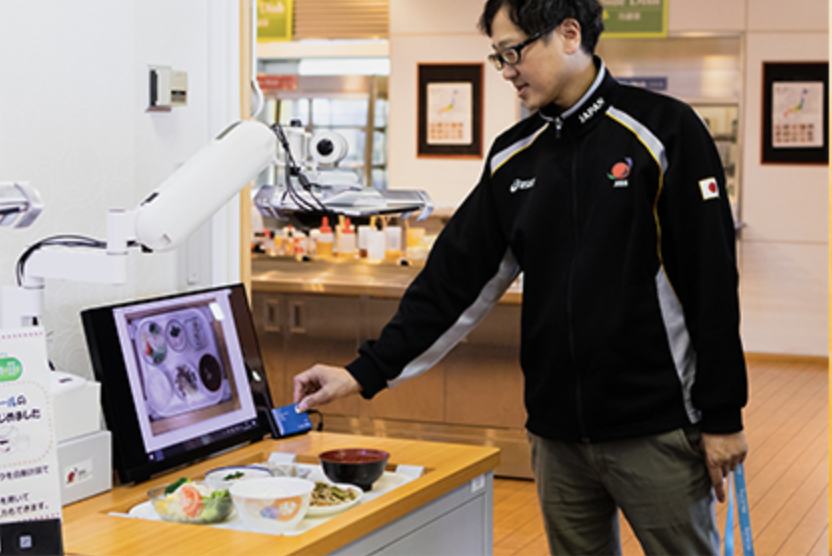
From Food and Video Images to Athletic Performance: Hybrid AI-Human Technologies for Elite Athletes in Japan
Biography
Tomokazu Miura is IT Section Manager at the Japan Institute of Sports Sciences (JISS). Since joining JISS in 2005, he has contributed to the development and operation of information systems supporting elite athletes and coaches, including video analysis, athlete data management, and medical information platforms.
His expertise lies in sports informatics, performance analytics, and the application of ICT to high-performance sport. He has been serving as a video analyst for the Japanese national weightlifting and ski jumping teams since 2012 and has delivered special lectures at The Open University of Japan since 2016.
Talk Abstract
The Japan Institute of Sports Sciences (JISS) is a national research institute dedicated to enhancing the international competitiveness of elite athletes and advancing high-performance sports science. This presentation introduces two key areas driven by our sports technology initiative: video analysis and nutritional support.
For video analysis, we develop specialized video feedback and playback tools tailored for training environments. Furthermore, to facilitate the efficient sharing of vast video footage from training camps and competitions, we manage a cloud-based sports video database integrated with advanced search and viewing applications.
In terms of nutritional support, we have deployed a nutrition assessment system powered by AI meal-image recognition. This system supports both elite and junior athletes, assists with condition monitoring, and manages weight reduction and gain in weight-class sports.
These examples demonstrate how technology elevates high-performance athlete support and opens new avenues for discussion on future.

Junko Ishihara, PhD, RD
Dean and Professor, School of Life and Environmental Science, Azabu University, Japan
From Questionnaires to Images: Dietary Assessment in Nutritional Epidemiology and the Promise of Multimedia AI — A Japanese Perspective
Biography
Junko Ishihara, PhD, RD, is a nutritional epidemiologist and registered dietitian. She is Dean of the School of Life and Environmental Science and Professor in the Department of Food and Life Science at Azabu University, Japan, where she also serves as Executive Trustee for Research and Community Engagement. She received her M.S. in Human Nutrition from Michigan State University, completed her dietetic internship at the University of Michigan School of Public Health, and earned her Ph.D. in Medicine from Osaka University. From 1997 to 2008, she worked at the National Cancer Center, Japan, on dietary assessment for the Japan Public Health Center-based Prospective (JPHC) Study, a large population-based cohort.
Her research focuses on improving how diet is measured in Japanese populations. This includes validating food frequency questionnaires, developing dish-based and web-based dietary assessment systems suited to Japanese mixed dishes, checking intake estimates against biomarkers and doubly labeled water, and studying diet and cancer risk, including dietary acrylamide. She served on the Expert Committee on Chemicals and Contaminants of the Food Safety Commission of Japan (2017–2021). She now works with information scientists on digital, image-assisted dietary assessment.
Talk Abstract
Diet is a key exposure in chronic disease, yet it is one of the most difficult to measure accurately. Epidemiological studies must capture the habitual diet of tens of thousands of people. For this reason, self-administered food frequency questionnaires (FFQs) have long been the standard tool in nutritional epidemiology, and they have produced much of today's evidence on diet and disease. However, self-reported methods carry substantial measurement error. This error can weaken diet–disease associations and lead to conflicting conclusions. The problem is especially serious in Japan, where foods are eaten mainly as mixed dishes with various seasonings, and where food-based FFQs tend to be less valid than in Western populations.
In this talk, the evolution of dietary assessment methods is traced, drawing on our experience with a large Japanese cohort, the JPHC Study. First, the validation of FFQs is described. Dietary acrylamide and cancer is then presented as an example of the limits of questionnaire-based assessment, where FFQ-based findings differ from those based on biomarkers. Finally, our dish-based, web-based 24-hour dietary recall system is introduced, together with its evaluation against doubly labeled water.
Building on these experiences, I would like to discuss with you what nutritional epidemiologists expect from multimedia- and AI-assisted dietary assessment. Among these expectations are recognizing culturally specific mixed dishes, estimating portion sizes, and capturing “invisible” components such as salt from seasonings. Participant burden must also be kept low so that repeated measurements can capture habitual intake, and results should be rigorously validated against objective reference measures. Through this dialogue, I hope to bring the perspective of nutritional epidemiology to the AI community, toward dietary assessment that is both scalable and scientifically valid.
Workshop Program
All times below are in Japan Standard Time (JST, UTC+9), the local time in Osaka.
09:00
09:10
Opening address
09:10
09:55
Invited Talk 1
Tomokazu Miura, Japan Institute of Sports Sciences (JISS), Japan
09:55
10:55
Oral Session 1 - archival track (5 papers)
10:55
11:15
Coffee break
11:15
12:15
Oral Session 2 - archival track (5 papers)
12:15
13:00
Invited Talk 2
Junko Ishihara, Azabu University, Japan
13:00
14:00
Poster session (~20 posters - archival, non-archival & nectar tracks) and networking
14:00
14:20
Coffee break
14:20
15:05
Panel discussion
4-5 panelists (to be confirmed)
15:05
15:15
Closing, awards, and community roadmap
19:00
21:00
Workshop dinner
Organization
The committee behind MADIMA 2026.

Stavroula Mougiakakou
University of Bern, Switzerland
Keiji Yanai
University of Electro-Communications, Tokyo, Japan
Dario Allegra
University of Catania, Italy
Ioannis Papathanail
University of Bern, Switzerland

Yoko Yamakata
University of Tokyo, Japan
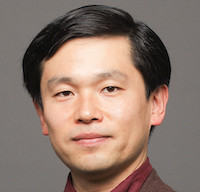
Ichiro Ide
Nagoya University, Japan

Chong-Wah Ngo
Singapore Management University, Singapore
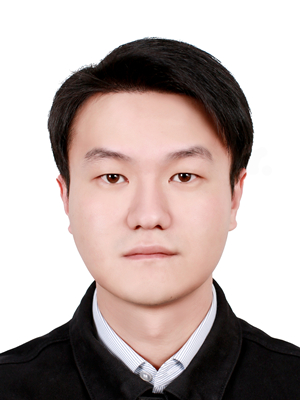
Chunyun Meng
University of Tokyo, Japan

Lubnaa Abdur Rahman
University of Bern, Switzerland

Lipika Dey
Ashoka University, India

Shuqiang Jiang
University of Chinese Academy of Sciences, China
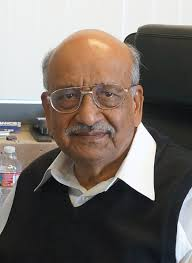
Ramesh Jain
UC Irvine, USA
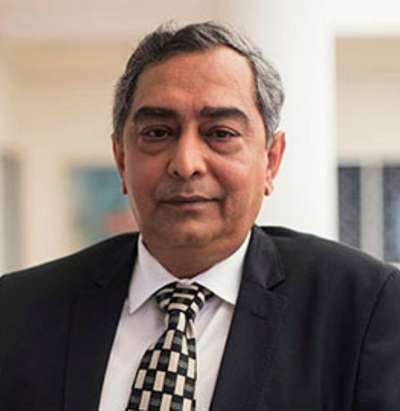
Partha Pratim Das
Ashoka University, India

Raimondo Schettini
University of Milano-Bicocca, Italy
Program Committee Members
Aulo Gelli
International Food Policy Research Institute, USA
Yuhao Chen
University of Waterloo, Canada
Bhalaji Nagarajan
Barcelona Supercomputing Center, Spain
Christos Diou
Harokopio University of Athens, Greece
Ready to share your research?
Submissions for MADIMA 2026 are now open.